

Episode Summary
In this episode of Be The Right Club, Hal Sutton and Mark Greenhalgh welcome special guest Mike Dynda from Makefield Putters for a putting roundtable.
Also Available On


Episode Transcript
Welcome into the Be The Right Club Today Podcast presented by Makefield Putters for the week of November 3. Hal Sutton, Mark Greenhalgh, and special guest today, Mike Dynda of Makefield Putters. Hal, how are you doing today?
Hal Sutton 1:12
I’m doing good, Mark. Been a good week of weather. Always like that.
Mark Greenhalgh 1:17
There you go. I like that too. It has been a little chilly here, so hopefully you have been warmer than I have been here in the Carolinas. Mike, how are you, man? Our man from Makefield.
Mike Dynda 1:26
I am good, Mark. Hello, Mark. Hello, Hal. How are you guys doing?
Mark Greenhalgh 1:29
We are doing good. Today we are going to geek out on some putter stuff for our listeners. We are going to talk about putting on the PGA Tour, what makes a good putter, and with Mike here we will discuss how you create a putter, what kind of data is used, and things like that. I am a data person. I am a want to know person. I ask interesting questions. But as we usually do, we start with what happened last week on the major tours. And Hal, this is that time of year when I think you guys on Tour maybe enjoyed things a little more because there is not a whole lot going on anywhere.
Hal Sutton 2:24
It is the time of year when we spend time doing a few things we do not get to do at other times of the year, and a lot of that is family time.
Mark Greenhalgh 2:33
And Mike, for you guys in the club making business, what does this time of year mean?
Mike Dynda 2:41
Tying up loose ends, getting ready for the 2026 Merchandise Show, and hopefully unveiling our new model for that show.
Mark Greenhalgh 2:50
New models. We like new models. All right, so let us kick it off. PGA Tour, nothing. DP World Tour, nothing. Korn Ferry Tour is done for the season. PGA Tour Champions is done for the season. LPGA Tour: at the Maybank Championship, Miyu Yamashita of Japan won in a three-way playoff for her second career title in her first full year on Tour. The 24-year-old sealed her victory with a birdie on the first playoff hole while Haejin Choi and Hannah Green made pars. Always good to see someone win a playoff rather than others losing it. So that is the quick recap from last week.
We are going to jump right into our topic of the week. This is a putting roundtable with a PGA Tour player and Makefield Putters with Mike. I have always wondered why I was such a good putter when I was a kid versus now. I have gotten a lot better with my Makefield putter, but here is what I think. I grew up as the son of a club professional, and the course we were at did not have a driving range. The only time you could practice was late afternoon in the summer by the maintenance shed, and you had to hit balls out onto a couple holes where people were playing. You hated doing it because you disrupted play. Sometimes you could hit from the front of the first tee when it was quiet, but again you were hitting into where people played. So I ended up doing far more short game practice. Putting contests, chipping contests, everything around the greens. I think that made me a better putter then because I spent more time doing it. Now when I do play, I spend my time trying to make a golf swing and hit the clubface instead of working on the short game. Hal, what about you?
Hal Sutton 5:39
I think we were better putters when we were young because we were positive. We were focused on making the putt instead of understanding what it meant to miss it. Expectations as adults are different. As kids we were hopeful, there wasn’t pressure. As adults, we put pressure on ourselves. Back then, I didn’t care as much. Now we care too much.
Mark Greenhalgh 6:24
Well Mike, thank goodness I have a Makefield putter now, because otherwise I might not make anything. How about you? You guys are on the cutting edge of putter technology. Are you a better putter now because of all the work you do with putters?
Mike Dynda 6:39
I answered the earlier question the same way Hal did. Young people putt better because their scar tissue is not as thick. They do not have fear. I might be one of the most opposite cases. I had two to three putts per green until I was 18, 19, 20. I didn’t learn how to putt until I became an assistant pro at Aronimink Golf Club and learned fast that I needed to make putts or lose money. Back then I worked 60 hours in the shop, had no time to practice, and needed to get up and down to win a five or ten dollar Nassau. Young golfers just do not have scar tissue yet. That matters.
Mark Greenhalgh 7:31
It is interesting. You see players like Tiger who made everything when he was not hitting it great, or Jordan Spieth making everything at one point until the driver went sideways. Pressure from another club not performing can make putting harder. Hal, what makes for a good putter on the PGA Tour? Lag putting, making putts of certain lengths, eliminating three putts? All of the above?
Hal Sutton 8:31
All of the above. A good putter on the PGA Tour makes everything inside six feet, makes several from ten to fifteen feet, and makes a few outside twenty feet. That is who wins tournaments. And Mike and I said the same thing in different ways: scar tissue and past failures live in our brains. It shows up at the wrong time. If we could think ahead instead of behind us, we would all putt better.
Mark Greenhalgh 9:21
Exactly. And looking at stats, during Brooks Koepka’s stretch of major wins, one announcer mentioned he had twice as many birdie looks inside twenty feet as anyone else. Hal, if you had twice as many twenty-foot looks as everyone else over four days, you are probably winning unless you are putting horribly.
Hal Sutton 10:09
Maybe. I did not make many twenty-footers. My strength was short putting. I made almost everything inside eight to twelve feet. I made twenty-footers occasionally, not regularly.
Mark Greenhalgh 10:39
Mike, do you analyze PGA Tour data versus amateur data when building putters?
Mike Dynda 10:58
I have analyzed it my entire career as a PGA professional and short game coach. Any data you want is either in my memory or on my phone.
Mark Greenhalgh 11:13
Looking at an example, Scottie Scheffler. He is twenty-first in strokes gained putting, fourth in putting average, eighth in putts per round, eighth in one-putt percentage, tenth from ten to fifteen feet. But from four to five feet he ranks 130th. From three to four feet he is 104th. From two to three feet he is 125th, even though that still means he makes 99.39 percent. That shows how fine the margins are.
Mike Dynda 12:44
Exactly. The difference between 30th and 120th might be half a percent.
Mark Greenhalgh 13:04
Which shows that when Scheffler makes those putts inside five feet for four rounds, you probably are not beating him. Hal, earlier we talked about Ben Crenshaw, one of the greatest putters ever. And yet he shot 77 in the final round at Riviera when you won the PGA Championship. That course has some brutal greens when they are fast.
Hal Sutton 13:48
They are fast with a lot of undulation. Even great putters have off days. And with Scheffler, everyone is making those short putts. Missing a few drops you way down statistically.
Mark Greenhalgh 14:23
Sam Burns led the Tour in strokes gained putting and from two to three feet he was ranked only 47th, making 99.77 percent. Less than half a percent separates 47th from 125th. That is how small the margins are.
Hal Sutton 14:47
A few missed putts drops you fast.
Mark Greenhalgh 14:56
Now that we have a Tour player and a short-game expert here, let us talk putting routines. My routine for full shots is simple, but for putting I take three practice strokes. Hal, what did you do as a junior versus as a Tour player?
Hal Sutton 16:03
Over twenty-five years things changed, but when things are going well you take the same amount of time on every putt. If you take longer, your brain is drifting into fear or doubt. Routine matters. You can change your routine during a slump, but whatever routine you use needs to be consistent.
Mark Greenhalgh 16:56
Mike, when teaching, where do you start when helping someone build a putting routine?
Mike Dynda 17:30
Breathing and visualization come first. Tiger was incredible with that. Jack Nicklaus said he felt he made many putts before he ever hit them. I always tell players to walk up like the best putter in the world. See it, hear it, feel the pride of the ball going in. Billy Mayfair’s stroke was not pretty, but he believed. Belief and visualization matter as much as mechanics.
Mark Greenhalgh 18:58
Good point. Jim Furyk’s full swing did not matter as long as the clubface was square at impact. Putting is similar.
Mike Dynda 19:38
Yes. And I once helped a college basketball team’s free throw routines. Free throws are like putting. It is the only time in those sports where you control the ball. Routine and breathing matter.
Hal Sutton 20:32
Every time you take longer, you are thinking negative thoughts. Not positive. That is why routine is essential. And the thought do not miss is a negative thought.
Mark Greenhalgh 21:05
Hal, many of the best putts you struck went in with authority. The ones that drip in often feel tentative.
Hal Sutton 21:51
Some great putters died the ball in, others hit the back of the hole. Tiger and Tom Watson hit firm putts. Nicklaus and Crenshaw died them in. Both approaches work. It depends on the player.
Mike Dynda 22:43
If your delivery speed is such that the ball would roll two revolutions past the cup, the hole plays its full size. If you ram it, the effective size shrinks. That is why some great putters preferred dying it in.
Hal Sutton 24:13
Tiger made more putts than anyone I ever saw and he hit them firm. I saw him three-putt from eight to ten feet because he was so aggressive, and his comeback putt might be three feet. But he kept doing what worked for him.
Mark Greenhalgh 24:41
Mike, last thing before the break. Hal, what were your best practice drills?
Hal Sutton 25:00
People practice short putts before a round because they want to hear the ball go in. That does not teach speed. I suggest more long-putt practice before playing. And then spend time around the hole on three and four footers with tempo in mind. Tempo is everything.
Mark Greenhalgh 26:42
A reminder to visit MakefieldGolf.com for Makefield Putters. Three-weight system, customization, great technology. We will talk more about it in the next segment with Hal, Mark Greenhalgh, and Mike Dynda.
[Makefield promo read by Hal Sutton omitted for brevity but corrected in wording.]
BTRC Audio 28:15
Welcome back to Be The Right Club Today presented by Makefield Putters.
Mark Greenhalgh 28:20
Reminder that you can use promo code HalSutton15 at MakefieldGolf.com to receive fifteen percent off a new putter. Mike, when creating a new putter, what data do you use?
Mike Dynda 29:14
We always work to get the ball rolling sooner, skidding less, and still produce a head shape people like.
Mark Greenhalgh 29:30
Do you analyze skid data on test models on different greens?
Mike Dynda 29:42
Yes. At our facility in Bensalem, Pennsylvania, we use the Quintic system. We study how quickly a ball gets out of the depression in the grass and starts rolling on its axis. Loft is a big factor. Our goal is getting the ball rolling as soon as possible.
Mark Greenhalgh 30:49
And amateurs versus pros? Off-center hits?
Mike Dynda 31:25
Pros hit center often. Amateurs do not. You need a putter that maintains energy on off-center strikes so distance control is consistent.
Mark Greenhalgh 31:47
Hal, you have talked before about straight-back strokes versus arcing strokes.
Hal Sutton 32:02
I did not want much arc but was not perfectly straight back either. The biggest event I ever won I used a Spalding HBA putter, which was not face balanced. I putted incredibly with it that week but probably would not have over the long term.
Mark Greenhalgh 32:58
Mike, putter fitting is newer than club fitting. Where do you start?
Mike Dynda 33:18
We fit length first, lie angle second, then consider neck configuration and alignment features. Lie angle matters but not like irons, since face angle determines almost all of start direction.
Mark Greenhalgh 35:22
Does eye dominance or arc type determine center shaft versus heel shaft?
Mike Dynda 35:45
Some instructors believe that. In my view, great putters can make putts with anything because of confidence and willpower. But forgiveness matters for amateurs. And because of shaft angle laws, almost every stroke will have at least a tiny arc unless the shaft is nearly vertical.
Mark Greenhalgh 37:54
All right. Time for some stories. Hal, best pressure putt you ever made? And best putt you ever saw made against you?
Hal Sutton 38:26
Most nervous I have ever been was the 71st hole at Riviera when I beat Jack. I hit a wedge long, spun it back to about twenty-five feet, ran the first putt four or five feet by, and that downhill putt was lightning fast. Ben Crenshaw told me afterward he thought I was going to grab the ball before it fell in. And against me, when I beat Tiger at TPC, he hit a poor chip on 17 and left himself an eight or ten foot breaker. He poured it dead center. One of the best putts ever hit against me.
Mark Greenhalgh 39:49
I have one from the New Hampshire Open when I was seventeen. I needed to make about a twenty-five footer to have a chance at the cut. My parents were sitting on a hill behind the green. I looked at them, said wait a minute, walked to the ball, and knocked it straight in. Cut ended up being two over and I made it on the number.
Mike Dynda 41:24
I made a few putts qualifying for sectionals of U.S. Open qualifying. My hands would be shaking but I focused on visualization and breathing.
Mark Greenhalgh 42:20
A reminder about the promo code HalSutton15 for fifteen percent off at MakefieldGolf.com. Coming up next week on the PGA Tour is the Worldwide Technology Championship, won last year by Austin Eckroat by one over Justin Lauer. DP World Tour goes to the Abu Dhabi HSBC Championship. Paul Waring won last year but has struggled since. LPGA Tour heads to the Toto Japan Classic. Last year Rio Takeda won in a six-hole playoff over Marina Alex. Korn Ferry Tour is done for the year but Q-School is next month. Top five and ties receive the twenty-ninth priority position on the PGA Tour for 2026. And that is the wrap-up. Mike, thank you. Hal, always appreciate your insight.
Hal Sutton 44:55
Always a pleasure, Mark. Mike, thanks for joining us. Always enjoy your insight.
Mark Greenhalgh 45:04
Reminder to visit MakefieldGolf.com and stay tuned for new products coming soon. Todd Burrell will be back with me next week on Be The Right Club Today presented by Makefield Putters.
BTRC Audio 45:32
Thank you for listening to Be The Right Club Today with your hosts Hal Sutton and Mark Greenhalgh presented by Makefield Putters.
Episode Summary
In this episode of Be The Right Club, Hal Sutton and Mark Greenhalgh welcome special guest Mike Dynda from Makefield Putters for a putting roundtable.
Brought To You By Makefield Putters
Makefield Putters combines craftsmanship, engineering, and Hal Sutton’s passion for feel and performance. From the precision-milled face to the customizable weight system, each putter is built to inspire confidence and help golfers roll the ball their best.
Tour-Driven Design. Player-Focused Performance.
Makefield Putters are crafted with feedback from the highest levels of the game to help golfers roll it better.
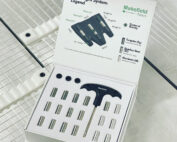
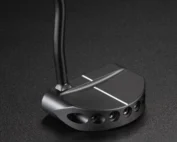
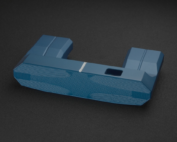
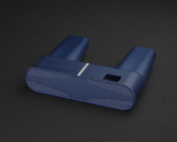
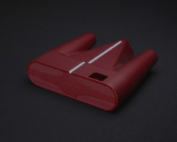
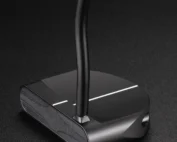

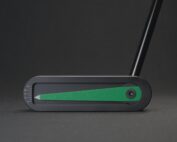
From face milling to balance and feel, every Makefield putter is designed with intention. Learn more about their approach to putter design and see the full lineup at MakefieldGolf.com.